Direct Surface Geochemical Methods for Petroleum Exploration
Complex geochemical study of near surface samples for direct identification of geochemical anomalies of “hydrocarbon breath” in near surface conditions.
MGS and Lomonosov MSU propose innovative integrated geochemical studies with development of:
1. Geochemistry of Gases and Isotope Analysis
- General sampling, geological description, direct hydrocarbon indicators - 100 %
- Analysis of hydrocarbon gases – 100 %
- Analysis of isotope composition of methane and CO2 – up to 25 % (high hydrocarbon gases content)
- Analysis of non-gas hydrocarbons (including biomarkers) – up to 50 %
- Bio-geochemical analysis – up to 25 %
- Analysis of microelements – up to 50 %
- Analysis of magnetization, еН - рН - up to 50 %
2. Biogeochemical methods
- Identification of specific bacterium kind:
- Biodegradation of HC :
С1-С4
- Pseudomonas, Mycobakterium
С8-С30
- Rhodococcus, Nocardia, Arthrobacter
С8-С30
- Desulfovibrio
3. Biomarker analysis methods
- Analysis of All non-gases HC range (from C9 to C 40)
4. Litho-geochemical methods
- Integrated Map of Geochemical Anomalies
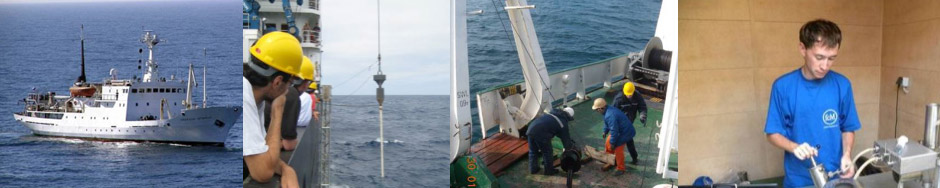
Methodology of Marine Sampling
- Sediments sampling depth – 1.5 -3 m;
- Extraction of gases ASAP after sampling ( field job);
- Specific de- gasification technique;
- Extracted gas can be transported to lab in special tube;
- No lab job in field! Risk of obtaining low quality result
Methodology of Land Sampling
- Sampling from seismic wells (upholes or source holes);
- Depths for sampling should be around 10- 12m;
- 2 samples per well (up to 0.6 kg of sediments can be taken - each 1 m) for normalizing of data;
- Don’t worry with some drilling HC’s “pollution” – biomarker method will identify migrated HC’s and HC’s from pollution;
Best sampling:
- Sampling from one specific stratigraphic layer;
- Sampling of only pelite fraction with maximum gas sorption.
- Gas Content Mapping